
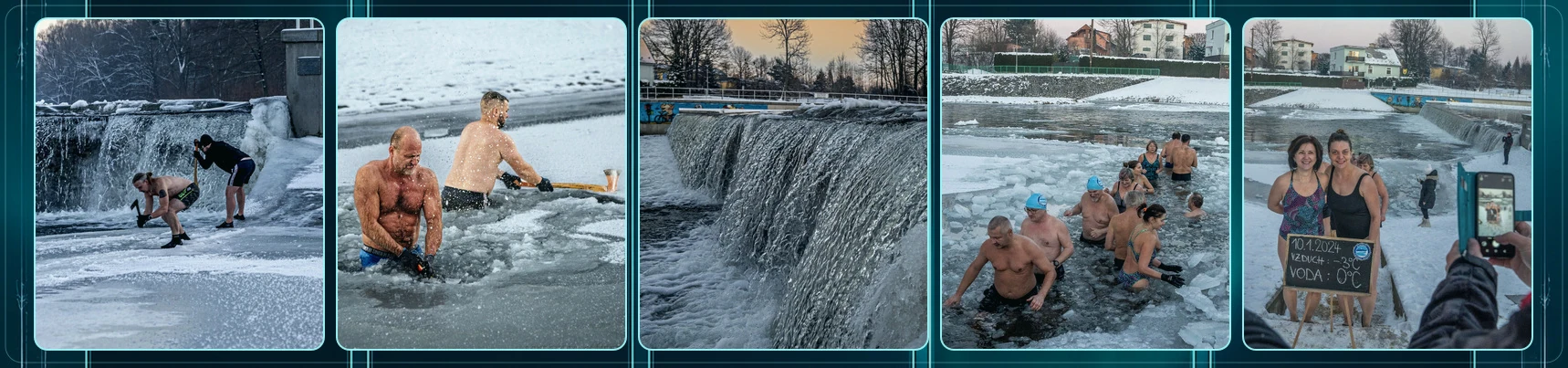
Can I start river swimming at any time, even when the water is close to freezing?
Yes, you can start all year round. Summer or autumn is more comfortable, but if you are healthy — ideally confirmed by an exercise stress test — you can begin at any time with an experienced swimmer. A healthy body is not so fragile that a brief dip in icy water will harm it. Expect your first swim to be short: a minute is enough to begin with, then gradually increase your time.
Do I need to take cold showers for a while before my first river swim?
No, you do not. Cold showers are one good form of cold acclimatisation, as is exercising in cold air. However beneficial they may be, they are not essential preparation for winter swimming.
Swimming in cold water is a rather different experience, and a shower cannot really prepare you for it. That said, cold showers are a good thing.
Is sitting in a barrel or bath of icy water a good way to acclimatise?
I do not recommend it, especially for beginners. You cannot move, so you are more likely simply to become chilled than to acclimatise. Movement matters in icy water. Once you are experienced, an occasional few minutes in a barrel is an option, though you may no longer feel the need.
My hands get cold in the river. Should I wear gloves?
If you have no relevant health condition, my answer is no. Healthy hands gradually adapt, and the cold becomes less unpleasant. Otherwise, you might as well swim in a wetsuit or sit at home writing about cold-water swimming on Facebook. We swim in winter, so we put up with some discomfort. Warmth and sensation return once the whole body warms up. If you are a beginner, the water is at 4°C or below and your fingers tingle afterwards, use this simple rule: one minute in the water for each degree above zero. Next season will probably feel easier.
Should I wear water shoes or a swimming cap? What about a woolly hat?
Water shoes offer little warmth but help protect your feet in the water and on the way in and out. Depending on the terrain, they can be useful. A swimming cap makes immersing your head much more comfortable, which matters if you want to swim anything other than head-up breaststroke. Both water shoes and swimming caps are permitted in winter swimming competitions.
To my mind, a knitted hat or any cap not designed for swimming makes no sense in the water. People copy the habit from other beginners’ Facebook photos. The reasoning is simple: your body is immersed in icy water, which draws heat away around 25 times faster than air. Compared with heat loss from the rest of the body, the loss from your head above the surface is negligible, however warm the hat may feel. A non-swimming hat also discourages you from getting your head even slightly wet.
Should I put my head underwater?
You need to if you want to swim front crawl well. It is not compulsory; you can swim breaststroke instead. If you try it and feel comfortable, by all means immerse your head. It can be pleasant at the end of a swim and helps further acclimatisation. I strongly recommend a swimming cap: it is much more comfortable than going without one. For longer periods with your head in the water, protect your ear canals with a cap covering your ears or with earplugs.
What is the quickest way to warm up after swimming?
By moving. Exercise is good; running is even better. If you can, run after swimming. Twenty minutes at an easy pace usually shakes off the cold, with a few extra minutes for anyone still chilly. Do not take the cold home: you should arrive feeling comfortable, otherwise something needs adjusting. Despite advice you may see on Facebook, prolonged shivering is not beneficial. Match your time in the water to your ability to warm up afterwards. A shorter swim is better than feeling cold all evening.
How should I breathe in the water?
Just breathe. Your body does not need reminding how. At first, you can consciously try to deepen your breathing, but whether you do or not, you will breathe in.
Should I warm up, do breathing exercises, meditate, play a drum or practise yoga before getting in?
Do whatever you enjoy, but none of those things is necessary. Come to the river, get in without unnecessary fuss and swim. Posing for the photographer for Facebook adds to the experience.
Should I swim alone if nobody can join me?
NO! Always do this with other people. Whatever your health, have someone who can notice a problem, prevent you from drowning or call an ambulance. You can drown even in shallow water close to the bank.
What are the benefits of joining you at U Žida?
Above all, you will not be swimming alone. At the advertised times, there is always someone to swim with and an experienced person to offer advice. Plenty of people come to U Žida. You do not need to arrange a time and change it three times to suit everyone. Most people find swimming with a group more enjoyable, and you will meet interesting people.
Crowds make me uncomfortable. I prefer swimming with one friend.
That is not a question, but yes, some people feel that way. You can try learning to enjoy group swims, or simply keep swimming as a pair or a small group. I will be pleased to see you at events such as the season opening or our Christmas and New Year swims. One thought: three swimmers attract the attention of every passer-by, whereas in a crowd you can blend in.
How long should I stay in the water?
There is no single answer. If you have no competitive ambitions, I would favour less time rather than more. Experienced swimmers usually know their limits. In your first season, increase your time very slowly and carefully. Start with a minute and build up gradually. A healthy person will often soon manage five minutes even in very cold water, which is more than enough for the benefits of acclimatisation. You may eventually find fifteen, twenty or more minutes comfortable, but leave discovering that until after you have completed your first full winter season in good health.
What if I have a question you have not covered?
Message me on Messenger or WhatsApp, email or call. I have clear answers to most questions, and I can also say when I do not know. I cannot answer questions such as ‘I have this medical condition; can I swim in winter?’ Ask your doctor. Can you swim while pregnant? Yes. While breastfeeding? Yes. With one leg? Yes. Or you can join numerous Facebook groups and practise ‘cold exposure’ from the comfort of your living room without ever getting in the water.
Want to take your first dip? Write or call. We will meet a little earlier, talk everything through once more and then swim together. It will be enjoyable, and I look forward to meeting you.