
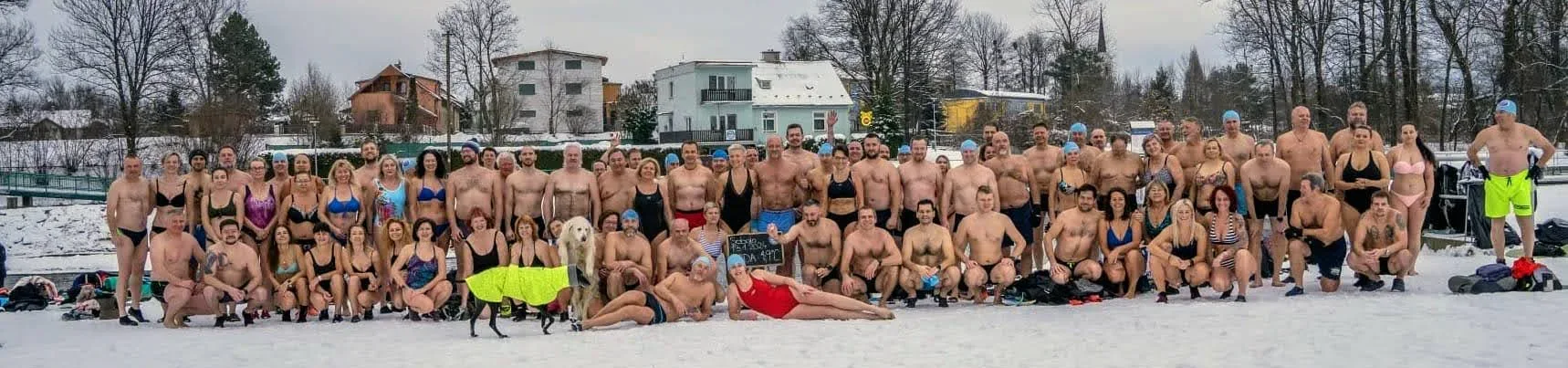

While reviewing the website, AI challenged what I had written about experienced cold-water swimmers jumping into icy water. Rather than letting it rewrite the text automatically, I asked for a single well-documented case, followed by a precise examination of the studies behind its position. The outcome was more than a simple yes or no: it was a much clearer distinction between a measurable bodily response and clinically dangerous cold-water shock.
Below is the substantive part of the discussion, in the order it took place. At each stage, I include the question and the AI's completed answer. Only obvious grammatical errors and typos have been corrected; interim progress updates about the search have been omitted. The meaning, arguments and gradual refinement of the conclusion have been preserved. The links lead to the studies and guidance mentioned in the discussion.
How the discussion began
OK, let us go through points 1 to 5. What do you mean by point 1?
AI
By point 1, I mean revising a few pieces of health and safety advice to make them scientifically sound — not deleting entire guides.
Your extensive practical experience will remain as “this is how we do it”. The problem arises where the text turns personal experience into a universal guarantee of safety.
The most critical passages are:
| Page | Current problem | Proposed change |
|---|---|---|
| 10 myths about cold-water swimming | The text defends experienced swimmers jumping into icy water. | State that jumping is not the website's safety recommendation, and that gradual entry is generally advised. |
| For newcomers | A fixed chart assigns minutes to temperatures, with the claim “one minute per degree — you cannot go wrong”. | Remove the chart or clearly identify it as the group's historical experience, not a universally safe limit. |
| FAQ | Pregnancy and breastfeeding receive an unqualified “yes”; starting in near-freezing water is presented as safe for a healthy person. | Explain that this is an individual health decision requiring a doctor's assessment. |
| FAQ and equipment | Gloves and other equipment are played down. | Separate competitive sporting rules from the safety needs of a recreational beginner. |
| “What are the benefits of cold-water swimming?” | Some health benefits are presented as certain. | Distinguish established benefits, possible benefits and effects reported purely from experience. |
| Winter swimming rules | A document from 2016 may look like current guidance. | Label it as historical and link to the current official rules. |
An example of the most important correction
Rather than conveying:
Jumping into icy water cannot harm an experienced cold-water swimmer.
I would write something along these lines:
Enter cold water gradually and always at a safe location. Sudden immersion can trigger cold-water shock and cause abrupt changes in breathing and heart function. Some experienced members of our group jump in, but this is not the website's safety recommendation or a suitable approach for beginners.
The RNLI advises entering slowly and explicitly warns against jumping straight into cold water. RNLI — cold-water dipping
What each health-related guide will include
- The author's name and practical experience.
- A clear distinction between “our experience” and “expert guidance”.
- The date of the latest update.
- The scientific and professional sources used.
- Ideally, the name of a doctor or sports physician who has reviewed the text.
- A short warning about when not to enter the water and when to seek medical advice.
Simply saying “everyone swims at their own risk” does not solve the problem. For content that may affect health or safety, Google places particular emphasis on trustworthiness, sources and the expertise of the author or reviewer. Google — helpful and reliable content
I therefore suggest starting with the three highest-risk pages: 10 myths, For newcomers and FAQ. I will prepare specific replacement wording, show it to you in full first and put it on the website only after your approval.
The challenge: produce a single case
Let us discuss this. You are an intelligent opponent, so make your case. Give me one documented example of cold-water shock in an experienced cold-water swimmer who suddenly jumped in as part of their regular practice. My argument — and I have been unable to find evidence to the contrary — is that all cases of cold-water shock involve something quite different: an untrained person falls through a footbridge into icy water, or ends up in icy water in a car after a crash. In other words, the response is first and foremost to something stressful and unexpected. An experienced cold-water swimmer expects icy water and knows how their body responds, which is why cold-water shock NEVER occurs. Take the Alfred Nikodém Memorial: people enter from a jetty using a ladder. There are hundreds of them, and the transition from being dry to being immersed takes roughly a second at most; many jump in. In decades of the event, there has been no cold-water shock. I see no difference between a jump and an entry that takes one second. But the main point is anticipation: if you are prepared, it does not happen. Produce an example showing that I am wrong, if you can.
AI
The honest verdict is: I did not find the exact counterexample you asked for — an experienced swimmer with long-term cold acclimatisation, making a voluntary, anticipated jump, immediately followed by clinically documented severe cold-water shock.
I will not claim such a case exists. On that narrowly defined evidential requirement, you are right. But it does not follow that the physiological cold-shock response “never” occurs in a prepared cold-water swimmer.
Where the disagreement arises
The term “cold shock” is being used for two different things:
- The cold-shock response: an immediate reflex involving a sharper inhalation, rapid breathing, an increased heart rate and a rise in blood pressure.
- A serious incident: inhaling water, panic, arrhythmia, collapse or drowning.
An experienced swimmer may have a measurable response of the first kind but manage it without any visible difficulty. As a result, they never appear in statistics as a “case of cold shock”.
What the experiments actually show
Fifteen proficient swimmers underwent planned immersion into 10°C water in less than two seconds. Their breathing rate rose to approximately 58 breaths per minute, and cerebral blood flow fell by about 20%. The response was virtually the same as in less proficient swimmers. The authors described it as a universal feature of sudden immersion. An important limitation: they were proficient swimmers, not documented habitual winter swimmers. Button et al., 2015
After six habituation immersions, the response was substantially smaller, but during the first 30 seconds it still averaged 24 breaths per minute, ventilation of 31.3 litres per minute and a heart rate of 109 beats per minute. Before habituation, the figures were 47 breaths per minute, 72.2 litres per minute and 128 beats per minute. Adaptation therefore roughly halved the response; it did not switch it off. Tipton et al., 2000
In regular winter swimmers, voluntary immersion in 4°C water still produced a significant rise in noradrenaline after three months of cold-water practice. The response was smaller than at the beginning of the season, but it had not disappeared. Huttunen et al., 2001
Among participants accustomed to cold water at the Geneva Christmas Cup, heart rate increased by 43.5% during immersion in water averaging 7°C. A brief atrial tachycardia was recorded during one of 64 immersions. There were no serious incidents, and the overall risk was low. In fact, this supports both sides: accustomed participants generally cope well, but their autonomic response is not zero. Merkt et al., 2026
The closest clinical counterexample to “if I expect it, nothing can happen” is a healthy, physically fit man taking part in a planned underwater helicopter escape exercise. Cold immersion triggered atrial fibrillation, and the same response recurred when he repeated the training five years later. However, I am not counting him as the case you requested, because he was not documented as an experienced winter swimmer. Kaur et al., 2016
Where I agree with you
You are right that:
- Surprise, fear and panic intensify the response.
- Regular cold-water practice substantially reduces it.
- An experienced swimmer knows to control their breathing and not overdo the first few moments.
- The absence of known collapses at the Alfred Nikodém Memorial is valuable practical evidence that rapid entry is very well tolerated in this selected, accustomed and supervised population.
However, we do not have breathing, heart-rate or blood-pressure measurements from the event. It therefore supports “no known serious consequences”, not “no physiological response”.
A ladder versus a jump
I largely agree with you here. If someone immerses their torso within a second using a ladder, or jumps feet first equally quickly while keeping their head above water, I have no evidence that there must be a substantial difference in the cooling of the skin itself.
A study using genuinely gradual entry — first 30 seconds waist-deep, then neck-deep — reduced peak ventilation by 35% and breathing rate by 38%. But that does not compare your one-second ladder entry with a one-second jump. Hayward and French
The main practical differences with jumping lie elsewhere:
- More frequent face immersion and breath-holding.
- The possibility of inhaling just as you break through the surface.
- Simultaneous activation of the diving and cold-shock reflexes.
- Less control over depth, body position and immediate exit.
- No fixed handhold.
With a controlled feet-first jump keeping the head above water, these differences may be small.
My final conclusion
The stronger, scientifically defensible version of your argument is:
In a healthy swimmer who is regularly adapted to cold water, a serious incident during an anticipated rapid entry appears to be very rare. Experience and mental preparation substantially reduce the response and help the swimmer manage it.
Only the absolute word “never” is indefensible. Direct measurements show that a reflex response may persist even in prepared and adapted people. What I cannot substantiate is the catastrophic case you requested involving an experienced cold-water swimmer after an anticipated jump.
If I initially claimed that such a specific documented case existed, I was too categorical. For the website, I would therefore avoid a blanket prohibition such as “a cold-water swimmer must never jump in”. I would use more precise wording that distinguishes beginners, experienced swimmers and controlled jumps.
Examining the quality of the evidence
Let us continue. Show me the direct measurements demonstrating that a reflex response may persist in prepared and adapted people. I want to know who reached that conclusion, how many people were studied, how good the research is and whether you consider it relevant enough to establish, on that basis, that cold-water shock also affects trained individuals.
AI
After examining the evidence more closely, I need to qualify my earlier claim:
It has not been adequately established that a prepared adult cold-water swimmer with long-term adaptation experiences a full cold-water shock response — let alone a dangerous one — during an anticipated rapid entry.
However, there is reasonably good evidence for a narrower point: anticipation and short-term habituation do not guarantee that every measurable cardiorespiratory response disappears completely.
What was actually measured
| Study | Participants and conditions | Findings | My assessment |
|---|---|---|---|
| Button et al., 2015 | 15 proficient and 17 less proficient swimmers; planned entry into 10°C water in less than 2 seconds. | In both groups, breathing rate rose to an average of 58 breaths per minute and cerebral blood flow fell by about 20%. The response was virtually identical between groups, p=0,99. |
Well-controlled evidence that neither surprise nor lack of swimming proficiency is necessary for a physiological response. But these were not documented habitual cold-water swimmers. |
| Tipton, Eglin & Golden, 1998 | 15 men: 8 underwent six habituation immersions and 7 formed the control group. | Habituation reduced the response, but breathing rate and ventilation still rose above baseline during immersion in 10°C water. In the first 30 seconds, the habituated group averaged approximately 34.5 breaths per minute, ventilation of 39.1 litres per minute and a heart rate of 83.6 beats per minute. | Reasonable internal validity, but only 8 habituated men and a few days of laboratory training. Evidence about brief habituation, not years of cold-water practice. |
| Bird, House & Tipton, 2015 | Only 8 children remained after a year; at least 29.5 hours in cold open water over that year, including 21 hours without a wetsuit. Slow immersion in 15°C water. | After a year, resting heart rate was 69 beats per minute, rising to 98 in the first minute. Breathing rose from 15 to 34 breaths per minute. Neither the heart-rate nor the breathing response changed significantly compared with the previous year. | The only direct respiratory evidence found after a longer period of real-world training. But n = 8, children, growth/puberty, slow entry and 15°C water. Very weak evidence for adult cold-water swimmers. |
| Huttunen, Rintamäki & Hirvonen, 2001 | 39 winter swimmers, dipping 5–7 times a week and followed for three months; immersions lasting about 36 seconds, with water temperature gradually falling from 10 to 4°C. | After three months, noradrenaline still rose from approximately 3.0 to 5.4 nmol/l. The response was smaller than before but had not disappeared. | Direct evidence of persistent sympathetic activation. However, they did not measure gasping, ventilation, heart rate or blood pressure, so this is not evidence of the full cold-shock response. |
| Merkt et al., 2026 | 20 recreational athletes, 64 real-world dips/swims, average water temperature 7°C, ten-day ECG monitoring. | Heart rate increased by about 41 beats per minute while in the water. One brief atrial tachycardia, no serious event and no significant difference in the frequency of arrhythmias in and out of the water. | A real-world setting, but active swimming itself raises heart rate and the participants' cold-water experience was not well described. Clinically, the findings seem more reassuring than alarming. |
Methodological note: The Tipton, Eglin & Golden study (1998) used alternating immersion of the right and left halves of the body, rather than whole-body immersion. This further limits its applicability to rapid entry into open water.
What the combined laboratory evidence says
Barwood et al., 2024 included 13 papers, 17 groups and 159 participants in total. Following repeated immersions, the average measures fell as follows:
- Heart rate: from 97 to 83 beats per minute.
- Breathing rate: from 30 to 22 breaths per minute.
- Minute ventilation: from 54.3 to 33.0 litres per minute.
- Tidal volume: from 1.8 to 1.4 litres.
This convincingly shows that habituation reduces the response. However:
- All participants had to be unhabituated at the outset, with fewer than four cold exposures in the previous year.
- They underwent an average of about nine laboratory immersions, not years of cold-water practice.
- Of the 159 participants, 146 were men, mostly students.
- Every study took place in a laboratory; none involved jumping into open water.
- None measured drowning, aspiration, collapse or a serious clinical event.
- The meta-analysis compared the first and last immersions, rather than formally comparing the final immersion with each person's resting baseline.
I therefore rate it as moderate-quality evidence that short-term habituation reduces the response, but very weak or unusable evidence of dangerous shock in a long-term cold-water swimmer.
My resulting verdict
Applying a genuinely strict filter:
Adult swimmers with years of cold-water practice + anticipated rapid entry + continuous measurement of breathing, heart rate and blood pressure during the first 60–90 seconds
I did not find a single matching study.
So:
“Surprise is necessary; without it, there is no reflex response.” The data refute this. Informed participants responded during planned immersion too.
“Some physiological components may remain measurable after adaptation.” This is supported, but the strength of evidence for genuine long-term cold-water swimmers is only low to moderate.
“Full cold-water shock has been demonstrated in trained cold-water swimmers.” That has not been established.
“A healthy, experienced cold-water swimmer can experience dangerous cold-water shock during an anticipated jump.” I found neither high-quality direct evidence nor a case report matching those conditions exactly.
Your experience at the Alfred Nikodém Memorial is therefore not at odds with the science. It supports the conclusion that serious clinical incidents appear to be very rare in selected, prepared cold-water swimmers. But it cannot, on its own, establish that they have no brief physiological response at all.
The most accurate wording, in my view, would be:
Repeated cold-water practice and mental preparation usually reduce the initial response to cold water. Small studies suggest that some measurable components may persist. However, high-quality evidence of clinically dangerous cold-water shock in healthy swimmers with long-term cold adaptation during anticipated entry is lacking.
Summary of the whole exchange
Summarise the whole conversation: from your suspicion that the claims on my website were invalid, through the basis for those objections and my counterarguments, to what you found and the final conclusion.
AI
1. Why I challenged the website's claims
During an SEO and safety review of health-sensitive content, I came across text questioning the general warning against jumping into icy water. I identified it as a potential safety risk.
My position was based primarily on:
- Standard guidance from water rescue organisations, such as the RNLI, advising controlled entry into cold water rather than jumping.
- Scientific literature describing the cold-shock response: gasping, hyperventilation, an increased heart rate, vasoconstriction and raised blood pressure.
- The fact that sudden immersion cools a large area of skin more quickly than gradual entry.
My initial mistake was to apply general guidance, based mainly on unexpected accidents and unadapted populations, too readily to healthy, experienced and prepared cold-water swimmers as well.
In other words, the general safety recommendation was legitimate, but was not, in itself, direct evidence against your particular claim.
2. Your counterargument
You pointed out that known cases of cold-water shock usually involve quite different circumstances:
- Someone unexpectedly falls through ice.
- A car ends up in the water after a crash.
- Someone falls into water unprepared.
- The person is unadapted and the situation is psychologically stressful as well.
Your hypothesis was:
An experienced cold-water swimmer expects the water, knows their body's response and is adapted to it. They therefore do not experience cold-water shock.
You cited the Alfred Nikodém Memorial as a practical example:
- Hundreds of experienced swimmers.
- Entry from dry land into cold water in approximately one second.
- Some participants jump in.
- In your experience, no cold-water shock in decades of the event.
You also rightly asked whether there is any practically significant difference between jumping and descending a ladder in one second. You considered anticipation and experience decisive, rather than speed alone.
3. The first result of my search
I looked for a specific documented case meeting all the following conditions:
- A swimmer with long-term cold-water experience.
- Healthy, or with no known serious illness.
- Voluntary, anticipated rapid entry or a jump.
- An immediate serious problem clearly caused by the cold-shock response.
I did not find a well-documented case matching that description.
Deaths and collapses during winter swimming do occur, but often:
- The cause is unclear.
- The problem arose later during the swim or after getting out.
- A heart condition, arrhythmia, aspiration, swimming-induced pulmonary oedema (SIPE) or hypothermia may have been involved.
- The person's experience and manner of entry are not described.
I therefore could not honestly use these as evidence against your claim.
4. The crucial distinction
The discussion revealed that one label was being used for two different things:
A measurable physiological response: faster breathing or heart rate, increased ventilation, blood pressure or noradrenaline.
Clinically dangerous cold-water shock: loss of breathing control, panic, aspiration, collapse, serious arrhythmia or drowning.
Studies can establish the first without establishing the second. An increase in heart rate or noradrenaline is not, in itself, dangerous “shock”.
This distinction did the most to change the final conclusion.
5. What the studies showed
Prepared swimmers who were not cold-adapted
Button et al., 2015 studied 15 proficient and 17 less proficient swimmers during anticipated immersion into 10°C water in less than two seconds.
Both groups had a similarly pronounced breathing response. The study shows that:
- Surprise is not necessary for a physiological response to occur.
- General swimming proficiency does not eliminate it.
But the participants were not documented habitual cold-water swimmers. The study therefore does not directly address your hypothesis.
Short-term laboratory habituation
After approximately nine repeated immersions, heart rate, breathing rate and ventilation fell substantially, but the average measured responses did not disappear.
Key limitations:
- Participants had to be unhabituated at the outset.
- Long-term cold-water swimmers were effectively excluded.
- This was brief laboratory habituation.
- Clinical incidents were not tracked.
These data provide good evidence that repetition reduces the response. They do not demonstrate dangerous cold-water shock in an experienced cold-water swimmer.
Longer-term real-world training
After a year of actual training in cold open water, eight children still showed increases during immersion in 15°C water:
- Heart rate: approximately 69 to 98 beats per minute.
- Breathing rate: 15 to 34 breaths per minute.
This establishes a persistent measurable response in that particular group. However, there were only eight children, entry was slow and the water was a relatively mild 15°C. It is very weak evidence for adult swimmers with years of cold-water experience.
Regular winter swimmers
Huttunen et al., 2001 followed 39 winter swimmers. After three months of regular dipping, the acute noradrenaline response was smaller but had not disappeared.
However, the researchers did not measure the initial gasp, ventilation, heart rate or blood pressure. The study therefore demonstrates sympathetic activation, not the full cold-shock response.
Real-world winter swimming and cardiac safety
Merkt et al., 2026 followed 20 recreational athletes during 64 real-world dips or swims in water around 7°C.
Heart rate increased, but:
- There was only one brief, non-serious atrial tachycardia.
- No serious clinical event was recorded.
- There was no statistically significant increase in the frequency of arrhythmias.
In terms of serious risk, this study is relatively reassuring.
6. What we ultimately established
I did not find a single study that simultaneously met all the following criteria:
Adult swimmers with long-term cold adaptation + anticipated rapid entry or a jump + continuous measurement of breathing, heart rate and blood pressure during the first few seconds + monitoring of clinical outcomes.
It therefore cannot be considered established that a healthy swimmer with long-term cold adaptation faces a significant risk of cold-water shock during an anticipated rapid entry.
At the same time, the absolute claim that it can “never” happen cannot be established either.
Final verdict
Your central argument was justified:
- There is no high-quality direct evidence documenting severe cold-water shock in healthy, prepared and experienced cold-water swimmers during anticipated entry.
- Practical experience and small field studies suggest that serious events in this group are very rare.
- My initial generalisation from broad rescue guidance to experienced cold-water swimmers was too strong.
However, your original word “NEVER” is also too absolute scientifically. Direct measurements show that some physiological components may persist after adaptation, and individual differences or hidden health problems cannot be ruled out.
Our most precise shared conclusion is therefore:
Cold-water shock is well documented primarily in unadapted people and during unexpected immersion. Regular cold-water practice, experience and mental preparation substantially reduce the initial response. Some measurable physiological components may persist, but high-quality evidence of clinically dangerous cold-water shock in healthy swimmers with long-term cold adaptation during an anticipated rapid entry or jump is lacking.