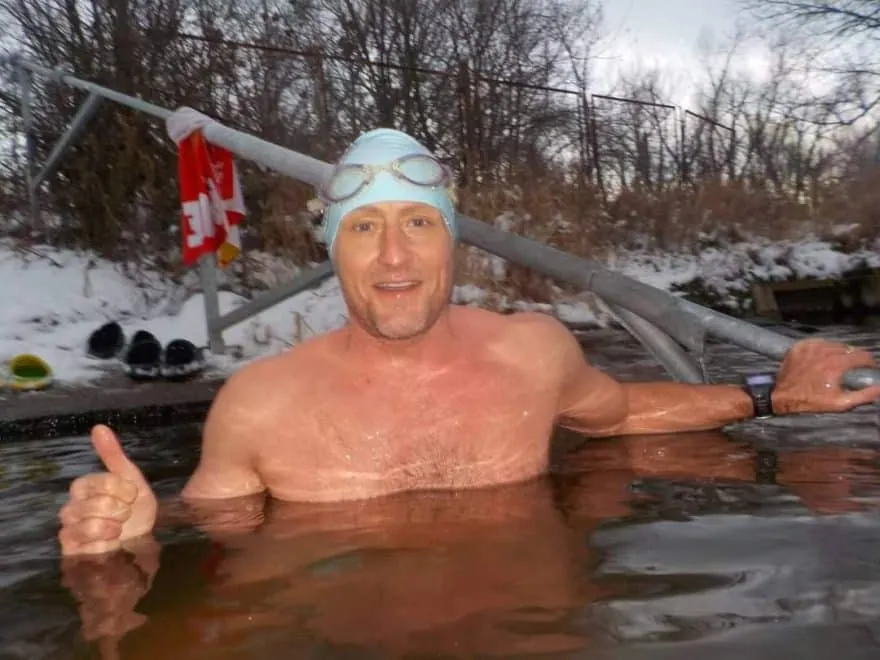
Winter swimming has rules, something most beginners do not realise. Search for ‘winter swimming rules’ if you would like to read them in full. You may think you will never enter a competition, and perhaps you will not, but we will still follow the rules.
Here is an example everyone can understand: following the rules is a cornerstone of sport. Young children know you cannot handle the ball in football. Volleyball players do not decide to ignore one bounce, and chess players do not move a rook diagonally even when playing at home.
At Otužilci Frýdek-Místek, we do things properly, or at least try to. We practise cold adaptation through winter swimming. Others acclimatise in different ways: Mr Čupa, for example, is certainly a cold-weather hiker, but not a winter swimmer. A friend who takes daily cold showers and dips in a pool once a month also practises cold exposure, but is not a winter swimmer.
Just as I encourage everyone to swim rather than stand in the water, I politely ask you to use the right equipment at our group sessions. If you already have the determination to come three times a week and swim, please do not rebel for its own sake or invent your own methods. Follow the way the sport is practised.
So, please note:
During swimming, we will not wear anything that increases insulation against the cold — neoprene or other clothing, socks, gloves, boots above the ankle and so on — apart from a swimming cap. Water shoes are a matter of individual choice.
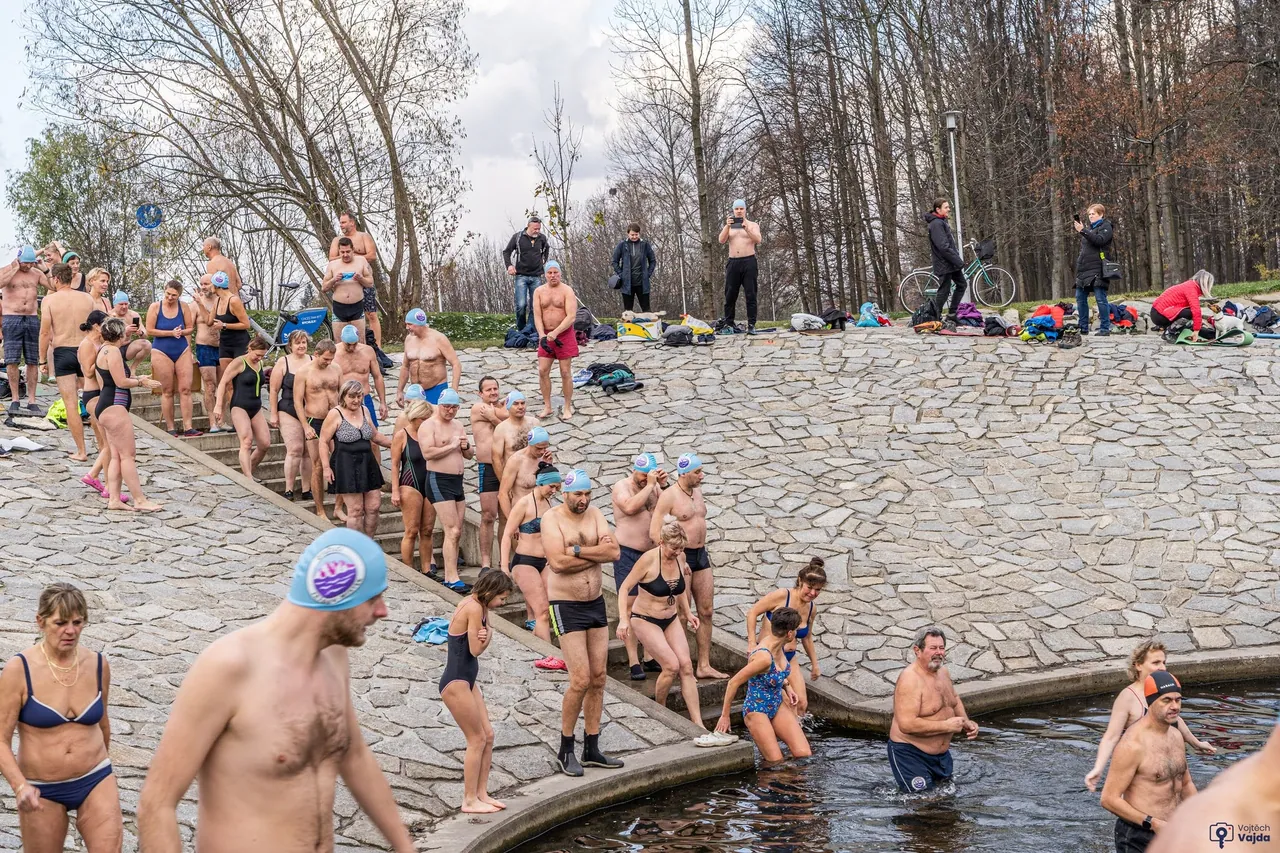
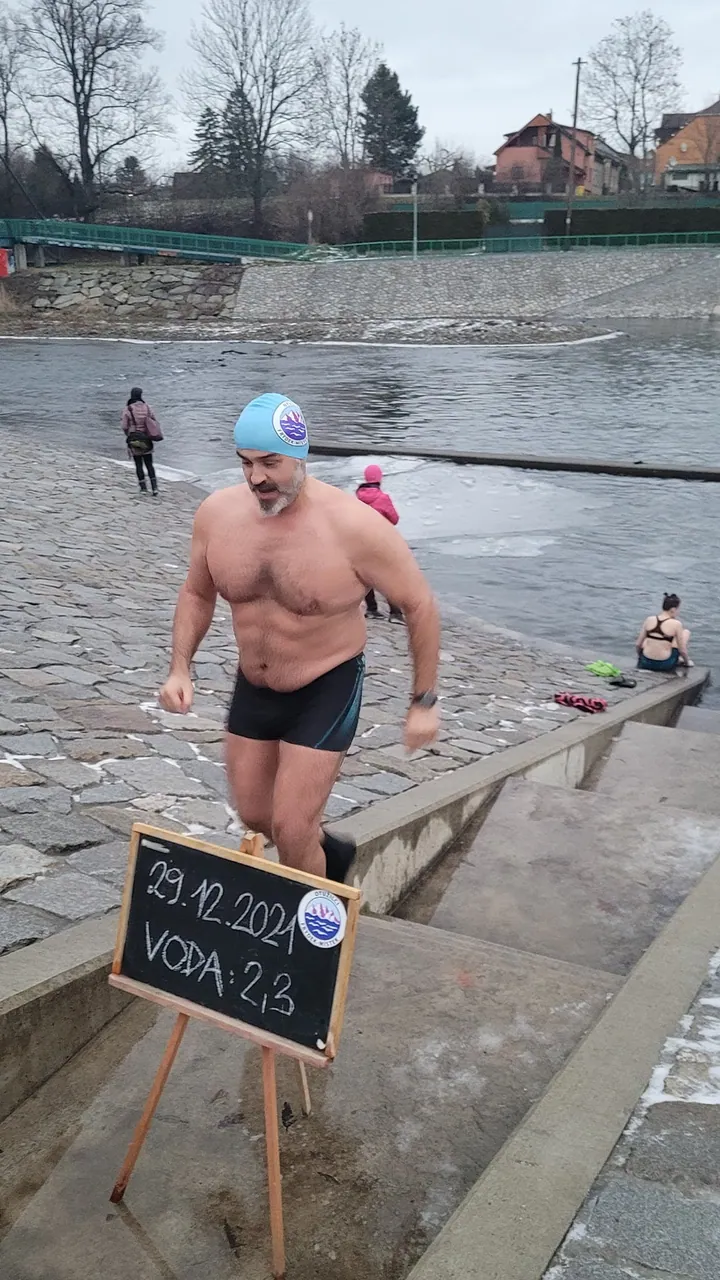
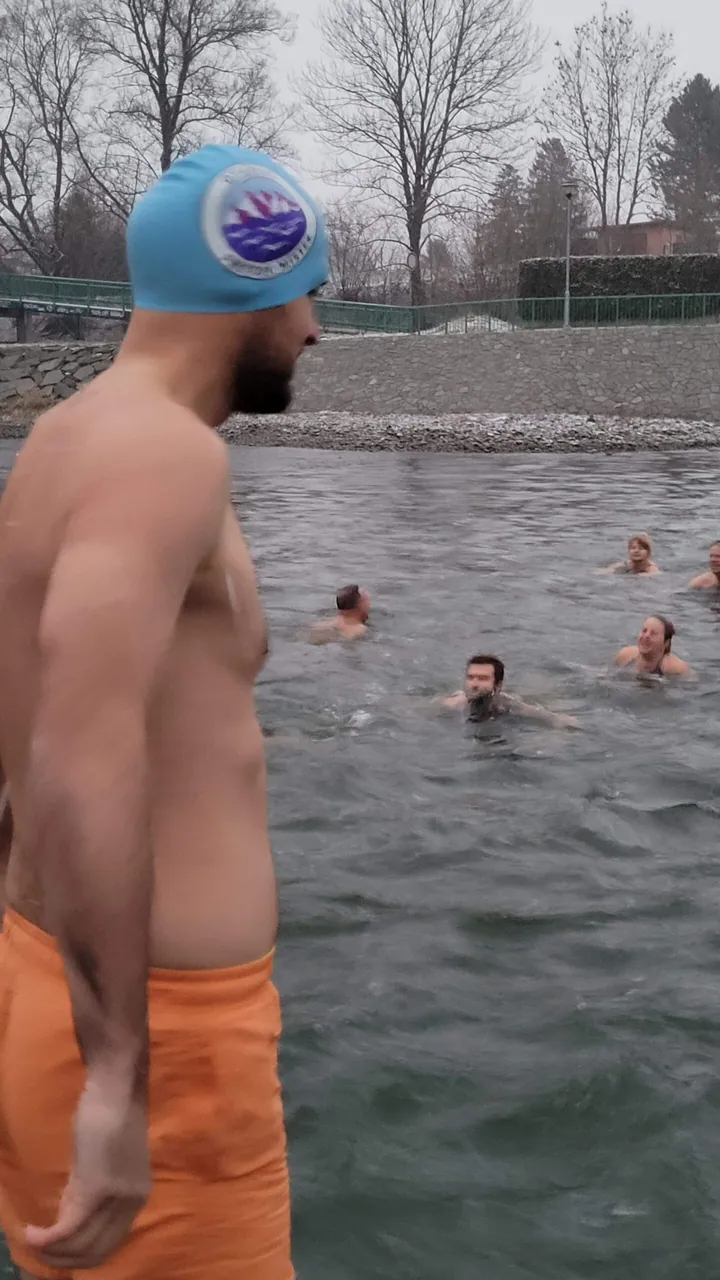
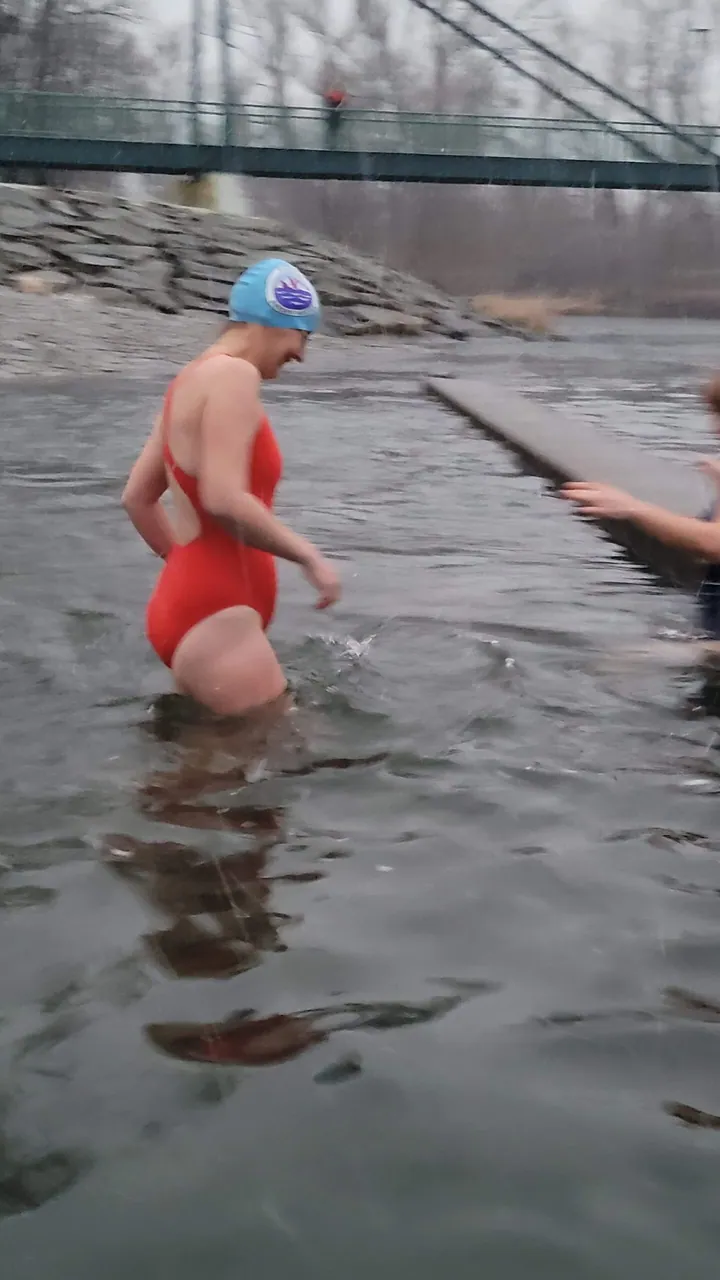
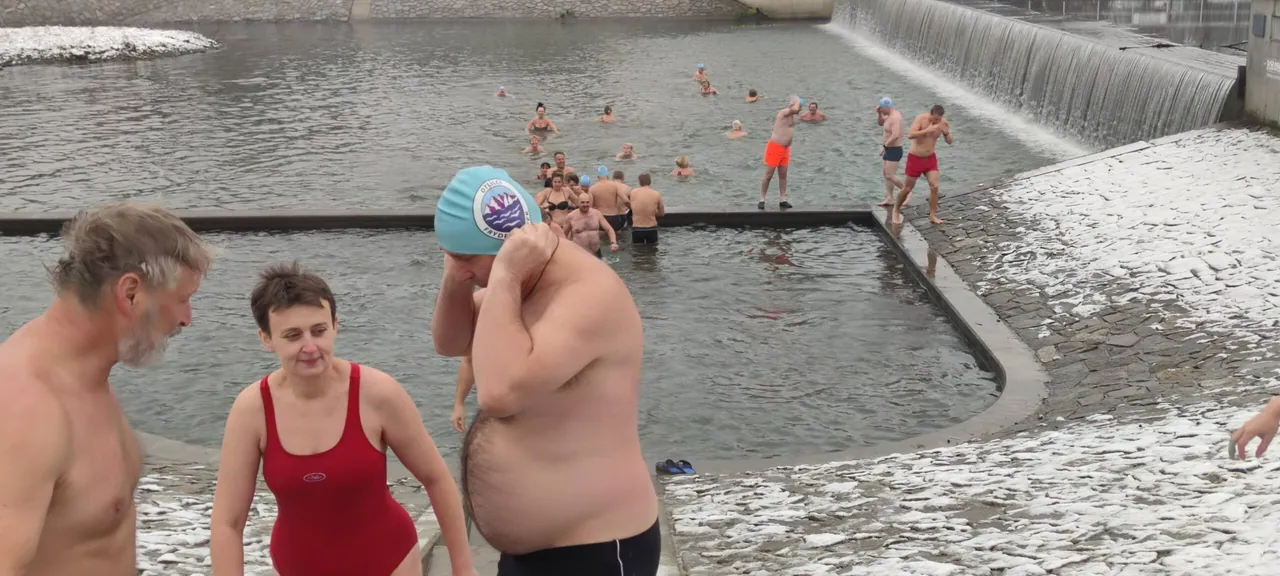
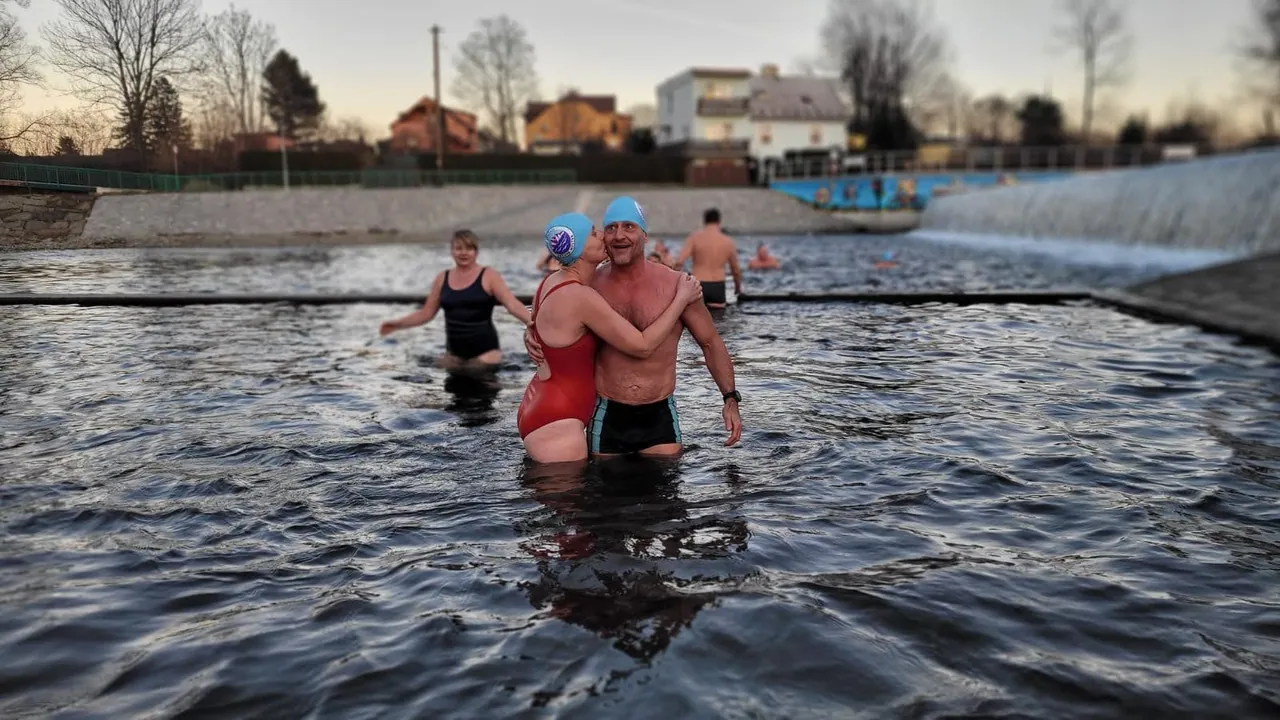
What does that mean? Leave fur hats, woolly hats, gloves, tall boots and wetsuits on the bank. Enter in a swimming costume, with a swimming cap or bareheaded. Water shoes and goggles are fine.
Besides following the rules, here is a brief explanation of why I prefer a swimming cap to a knitted hat.
- In Czech winter swimming terminology, you swim in cool water, above 8.1°C; cold water, 4.1–8°C; or ice water, 4°C and below. Usually, you stay in for only a few minutes. During that time, heat loss from your head above the surface is negligible compared with the rest of your body. For someone keeping their head dry, a warm hat therefore makes little difference to overall heat loss.
- If you are serious about cold-water swimming, do not avoid putting your head under, occasionally at first. Start by doing it at the end of a swim. Once you discover you can do it, you may enjoy it, begin breathing out underwater and try front crawl. New horizons open up — quite literally, as goggles reveal a surprising amount below the surface.
- If you immerse your head, wear a swimming cap. It helps keep water out of your ears and lets you feel comfortable in the water for longer.
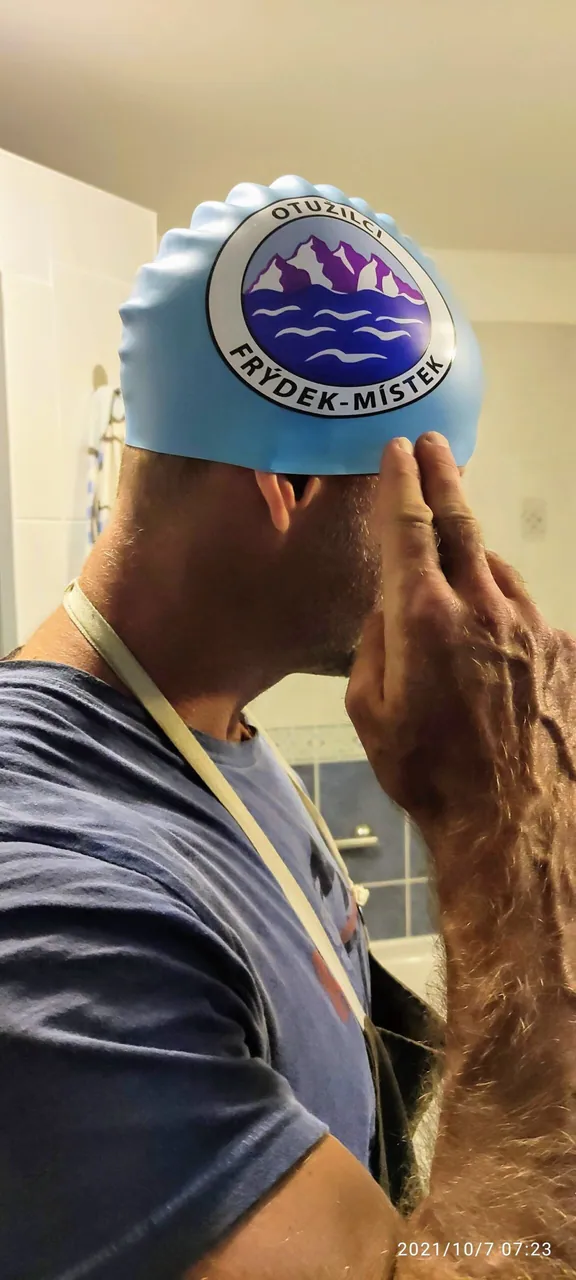
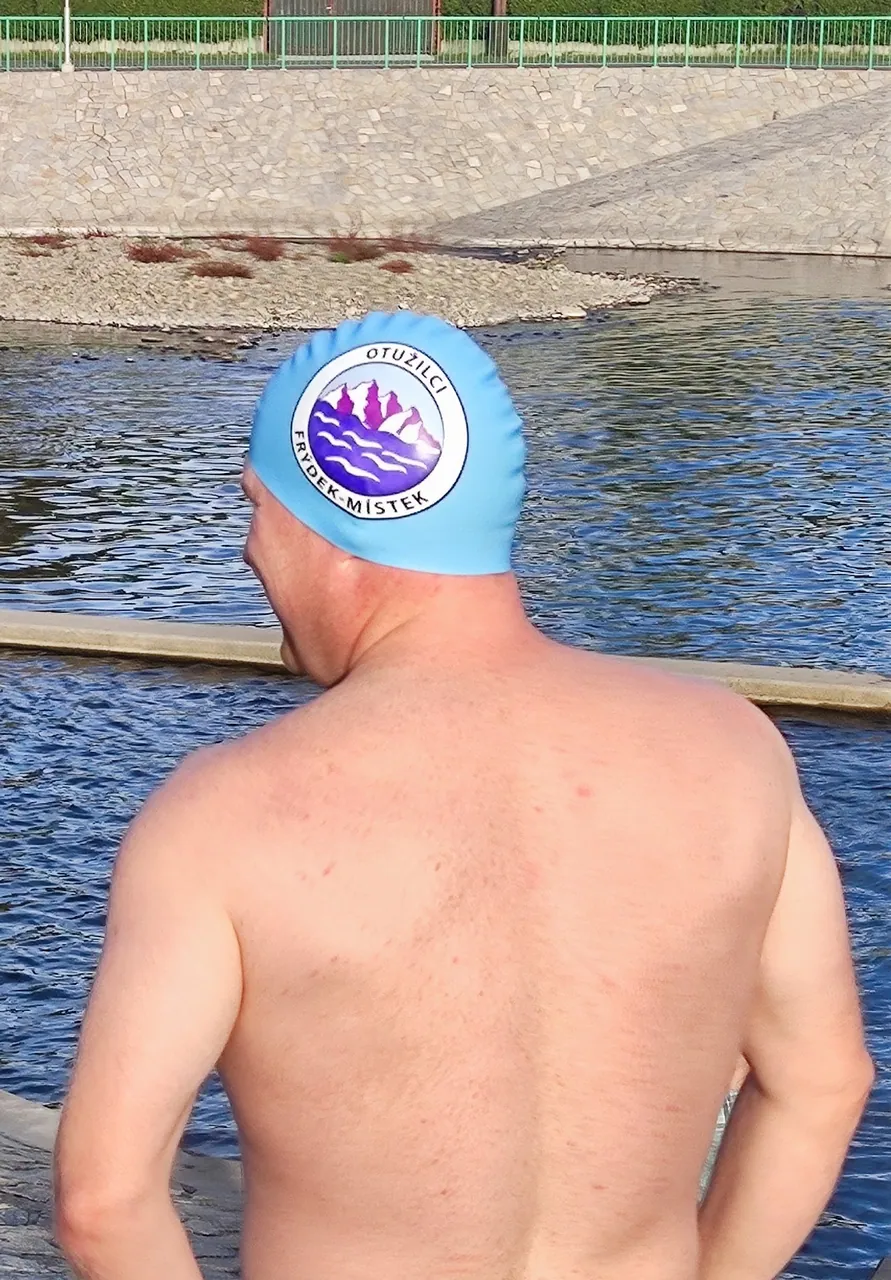
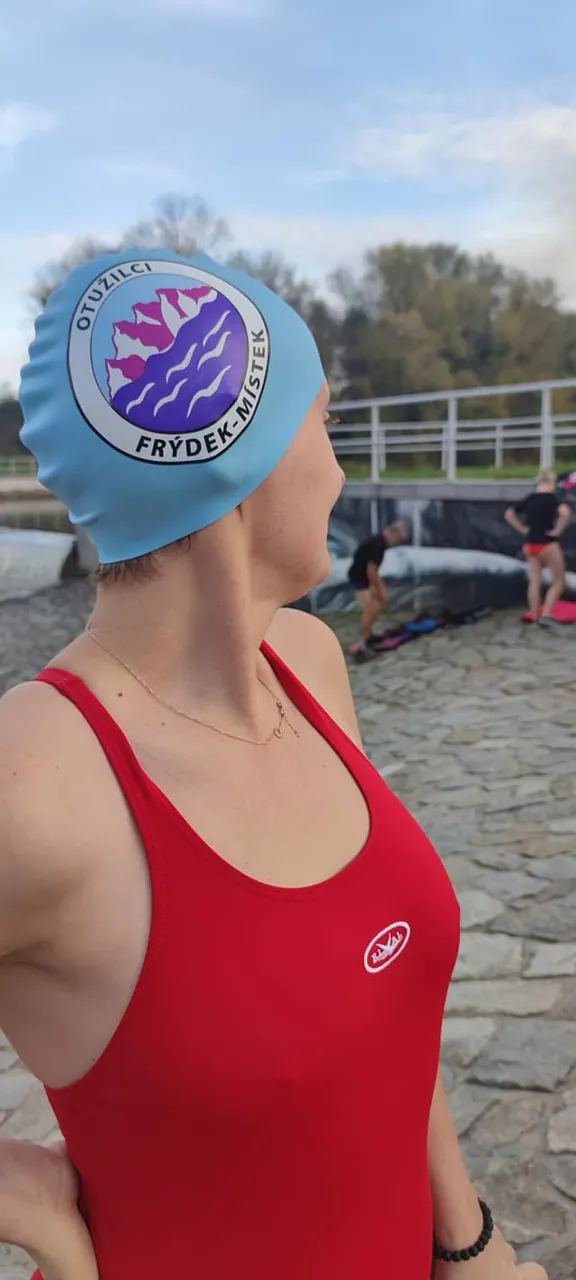
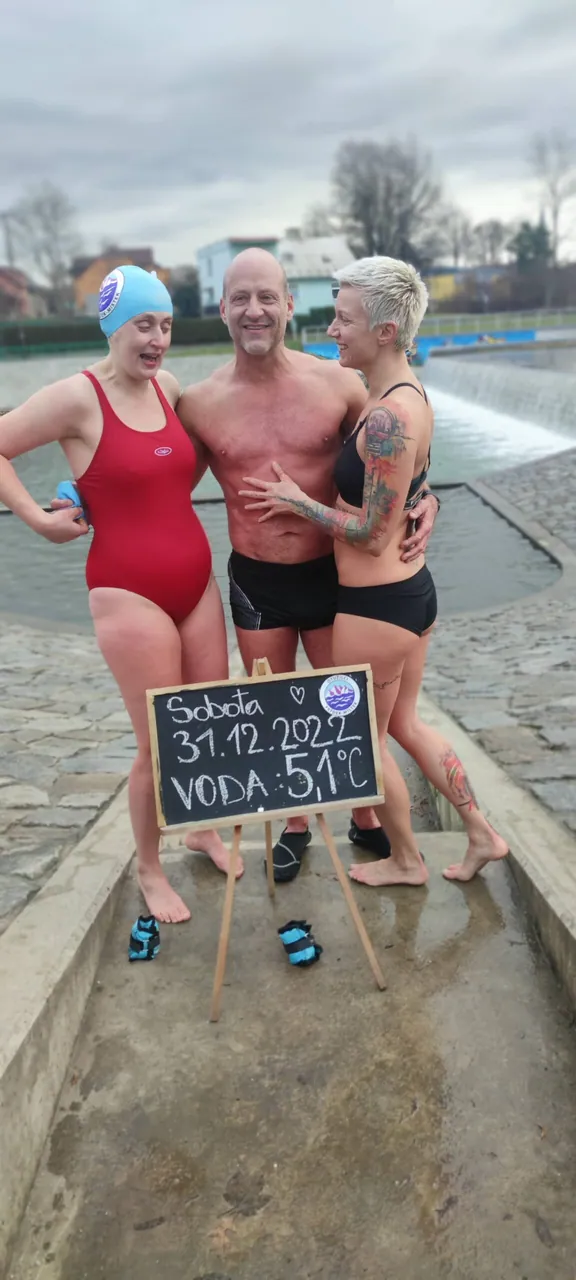
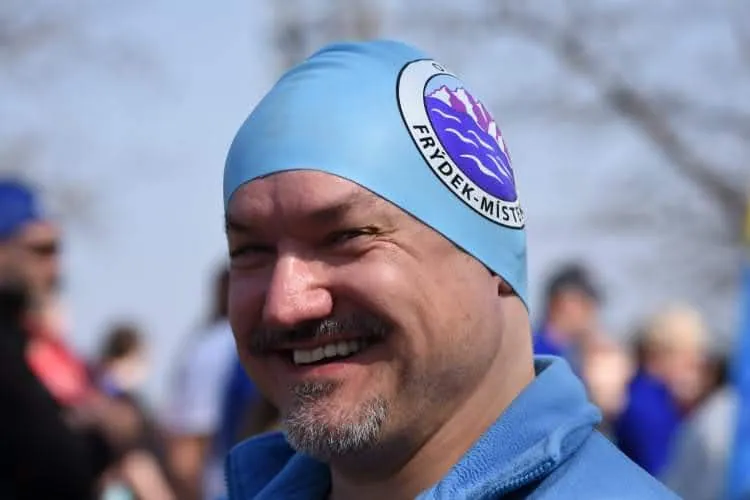
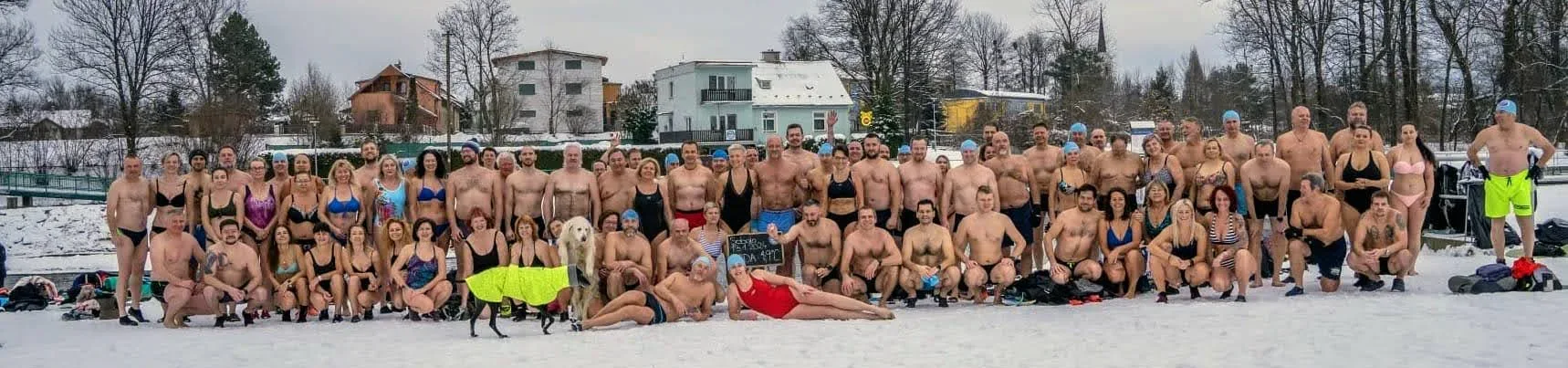
- And here is the best part: we have no team shirts, matching costumes or tattooed logos. A matching swimming cap with our logo is the one visible sign that identifies us as a group, as it does other dedicated cold-water swimmers. It is inexpensive and not for everyone, but anyone who swims for more than a few weeks can easily qualify. Otherwise, please buy any swimming cap for around 200 Kč at Decathlon, or swim without one.