
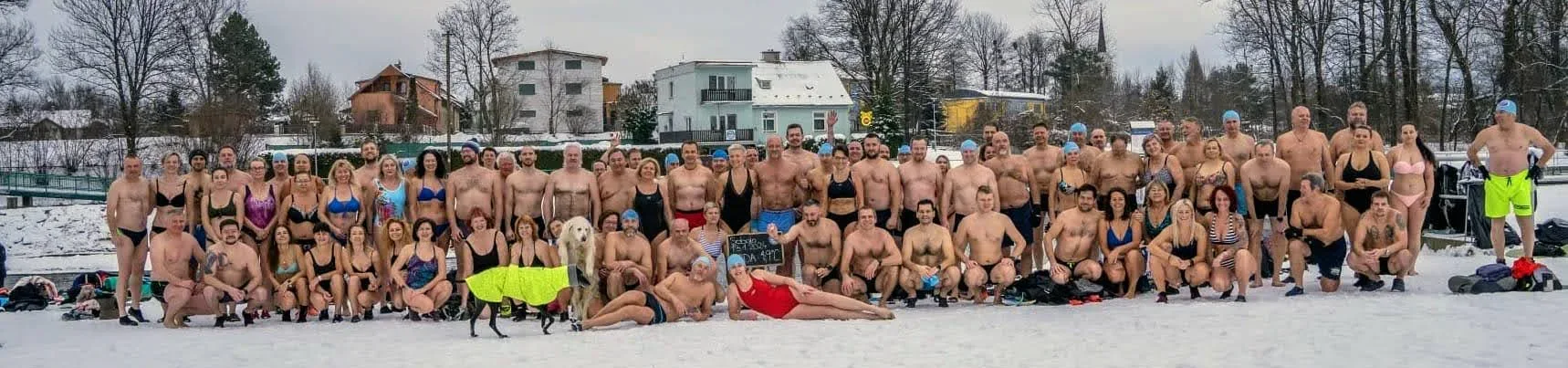
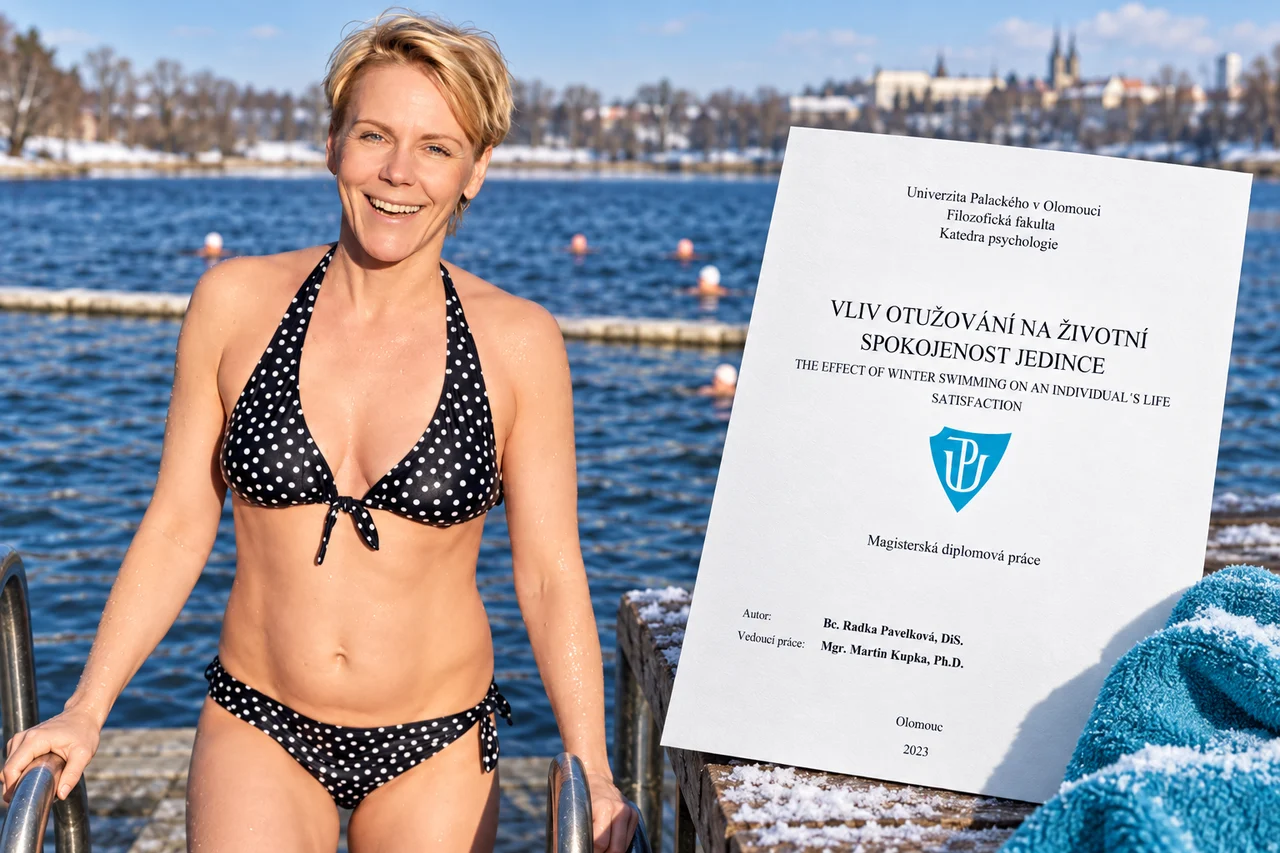
Cold-water swimming is often associated with physical health and tolerance of the cold. In her master's thesis, The Influence of Cold-Water Swimming on Individual Life Satisfaction, Radka Pavelková also explored its psychological aspects and the role of the group. Her research was carried out among the Otužilci Frýdek-Místek community.
The thesis was submitted and published in the university Theses system on 22 March 2023. It was written in the Department of Psychology at the Faculty of Arts, Palacký University Olomouc, under the supervision of Mgr. Martin Kupka, Ph.D.
How the research was conducted
The study combined quantitative and qualitative methods. The author compared questionnaire-based assessments of life satisfaction among 30 beginners before and after their first cold-water swimming season. She also conducted semi-structured interviews with 12 other group members about their motivations, expectations, benefits, drawbacks and social support.
Four areas of life satisfaction were examined: health, leisure time, satisfaction with oneself, and relationships with friends, acquaintances and relatives.
Key findings
Improvements in every area studied
After the season, the group's scores had increased significantly in all four areas. The greatest improvement was in satisfaction with oneself. The findings therefore recorded positive changes not only in health, but also in self-perception, relationships and the experience of leisure time.
The unexpectedly strong role of the group
Ten of the twelve interviewees identified social support as the most important benefit of group cold-water swimming. Meeting together helped them maintain a regular routine, cope with discomfort, form relationships and accept their own bodies. Participants also described how good spirits and motivation spread through the group.
Perceived mental and physical benefits
Interviewees described feeling calmer, being in a better mood, having greater confidence and self-discipline, and coping better with everyday stress. In terms of physical health, the most frequently reported benefits were better immunity, easier adaptation to the cold and improved recovery.
Beginners' motivations and expectations
Common reasons for starting included improving immunity, challenging oneself, developing self-discipline, recovering after exercise, finding social contact and supporting mental wellbeing. Expectations tended to be modest, so many participants described the eventual experience as a pleasant surprise.
How to interpret the findings
The thesis offers a valuable view of one particular community's experience, but it has clear methodological limitations. The sample was small and there was no control group. The changes observed cannot therefore be attributed automatically to cold exposure alone, nor can they simply be generalised to all cold-water swimmers. Several factors may have contributed at once, particularly regular exercise, time outdoors, personal expectations and social contact.
The strongest message is not a simple promise that cold water will solve every problem. It is that regular, meaningful activity, stretching one's own limits and support from a group may together be associated with greater life satisfaction.
Cold-water swimming needs to be adapted to your own health and experience. It does not replace medical or psychological care, and beginners should not compete with others over how long they stay in the water.
Read or download the full thesis
All 77 pages of the original Czech thesis are available below in our own reader. The document is hosted directly on the Otužilci Frýdek-Místek website. You can turn pages, zoom in, search the text or download the PDF.
Read it here on our website
Turn pages, zoom in and search the text. The original Czech PDF is hosted on the Otužilci Frýdek-Místek website.
Loading the thesis…